
Lewisville, TX · Garage Door Service
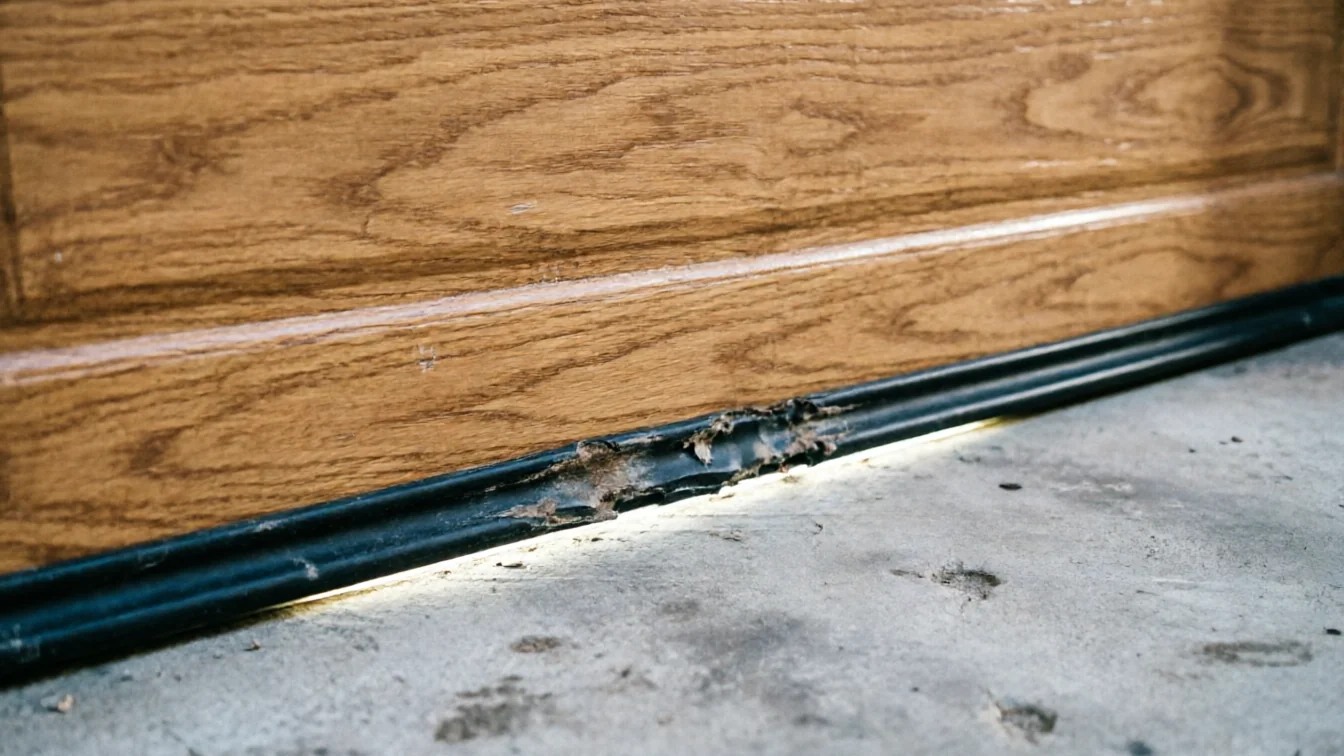
Stopping Drafts Through Worn Garage Door Seals in Lewisville
Why garage door weather seals fail on Lewisville's 1973-2014 housing stock, what drives the cost of fixing drafts, and the mistake most owners make first.
- Repairs & new doors
- Springs & openers
- Serving 7 nearby communities
What Is Going On
Most of the housing across this service area went up between 1973 and 2014, with the bulk of it clustered right around 2000. That matters for weather seals because vinyl and PVC bottom seals have a working life, and a door installed during that 2000s building wave is now carrying seals that are twenty-plus years past their install date, even if nobody's touched them.
The symptom is the draft you feel standing next to the door on a windy day, or the thin line of daylight along the bottom edge when the door's closed. Sometimes it's the side seals pulling away from the track, especially on wider double-car openings that were standard in a lot of the builder-grade construction from that era.
This isn't rot or failure from one bad storm. It's slow material breakdown - the seal hardens, shrinks, and stops pressing flat against the slab or the jamb. Once it stops sealing, it also stops doing its other job, which is keeping water and debris from working into the bottom bracket and the track. A door can look fine from the driveway and still be leaking air and water underneath.
What It Costs
We're not going to put a number here that we can't back up - seal cost depends on door width, whether it's a single or double opening, and what kind of track profile the seal has to fit, and builder-grade doors from the 1973-2014 stock aren't all the same profile. What drives the price up isn't the seal material itself, it's whether the retainer the seal sits in is also warped or rusted, because then you're replacing hardware, not just rubber.
The honest limitation: we can't quote a firm number without seeing the door. A straight bottom-seal swap on a door in otherwise good shape is a different job than one where the side seals, the stop molding, and the weatherstrip channel all need attention at once. If you want an actual figure, that's a conversation after someone's looked at the track and the retainer, not before.
The Common Mistake
The mistake we see most is replacing only the bottom seal and calling it done. On a lot of the doors from the 2000s construction wave, the side and top weatherstripping is the same age and the same material as the bottom seal, and it's degrading the same way. Fixing the piece you can see from the driveway while leaving the top seal brittle just moves the draft up six inches.
The second mistake is grabbing a universal seal off a shelf without checking the track profile. A lot of the builder-grade doors from that era use a T-style or bulb-style retainer that doesn't take every seal on the market. Force the wrong profile in and it'll look installed for a few months, then pop loose the first time the door cycles a few hundred times in a summer. Matching the seal to the actual retainer channel on the door, not just the door's width, is the part that gets skipped.
How Local Conditions Play In
This area sits in a moderate heat band, not an extreme one, which changes how the damage happens. It's not one brutal week that cracks a seal - it's years of daily expansion and contraction as the door and its weatherstripping heat up in direct sun and cool back down overnight. Combined with doors that are mostly original to that 1973-2014 construction window, that slow cycling is exactly what you'd expect to find wearing seals thin by now.
With 57,383 owner-occupied houses across the service area built largely on that same timeline, the pattern repeats block to block rather than being tied to one neighborhood. A house in Double Oak or Copper Canyon, eight miles out, was likely framed in the same building cycle as one in Corinth or Lantana, nine miles the other direction - the seal wear doesn't care which side of the service area the door is on, because the age and the climate exposure are close to the same everywhere in it.
Frequently asked questions
How do I know if my garage door seals are actually the problem and not the door itself?
Check for daylight along the bottom edge when the door's closed, or feel for moving air along the sides on a windy day. If the door closes flat and the track looks straight but you still get a draft, it's almost always the seal, not the door panel or the opener.
Do all the seals on my door need replacing at the same time?
Not always, but on doors from the 1973-2014 construction stock common here, the bottom, side, and top seals are usually the same age and material, so if one's brittle the others are close behind. We'd rather tell you that upfront than have you pay for a service call twice.
Can I just caulk around the door instead of replacing the seal?
Caulk can slow a draft temporarily along the jamb, but it doesn't flex with the door opening and closing, so it cracks and falls out fast. It's a stopgap, not a fix, and it won't address water getting under a worn bottom seal.
Related garage door services in Lewisville
More garage door guides
Book garage door service in Lewisville
Call now or request a quote - tell us what the door is doing and where you are.